€100,000 travel headache for ‘Mr 57’ David Carey
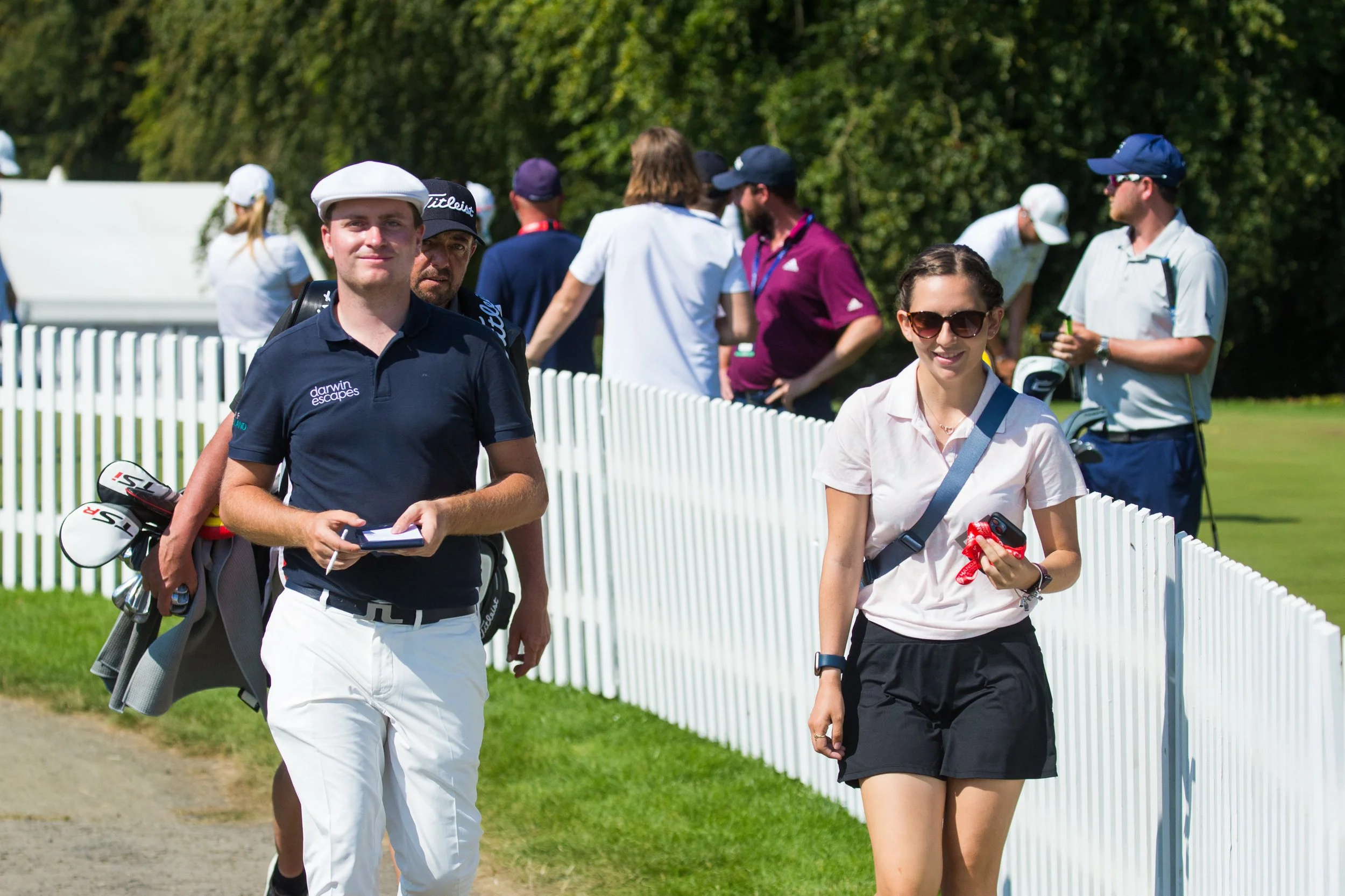
David Carey and his partner Kaitlyn (right) will be back on tour soon. Picture: Tristan Jones/LET
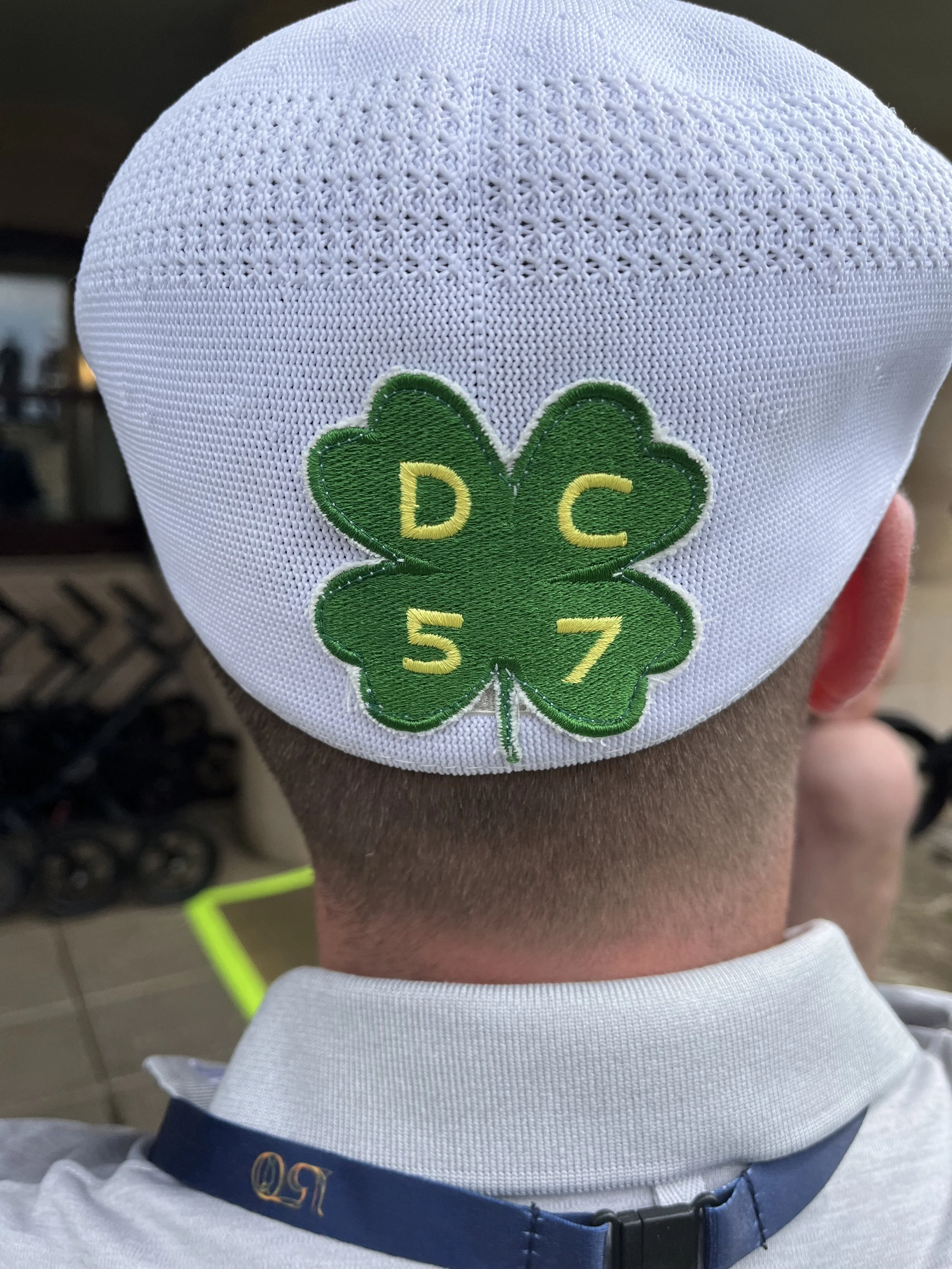
David Carey is used to making the extraordinary look routine. The 29-year-old Dubliner, who once shot a scarcely believable 11-under par 57 on the Alps Tour, is currently staring down the biggest logistical and financial challenge of his career.
As he prepares for the 2026 season, armed with status on both the Korn Ferry Tour and PGA Tour Americas, the reality of the eye-popping expenses—and the air miles involved—is hitting hard.
He’s in Las Vegas right now, mapping out a season that will take him from the heights of the Andes to the heartland of North America.
While his ball speed can still peak at a monster 198 mph, the biggest number on his mind right now is the $100,000 he needs to fund the entire campaign.
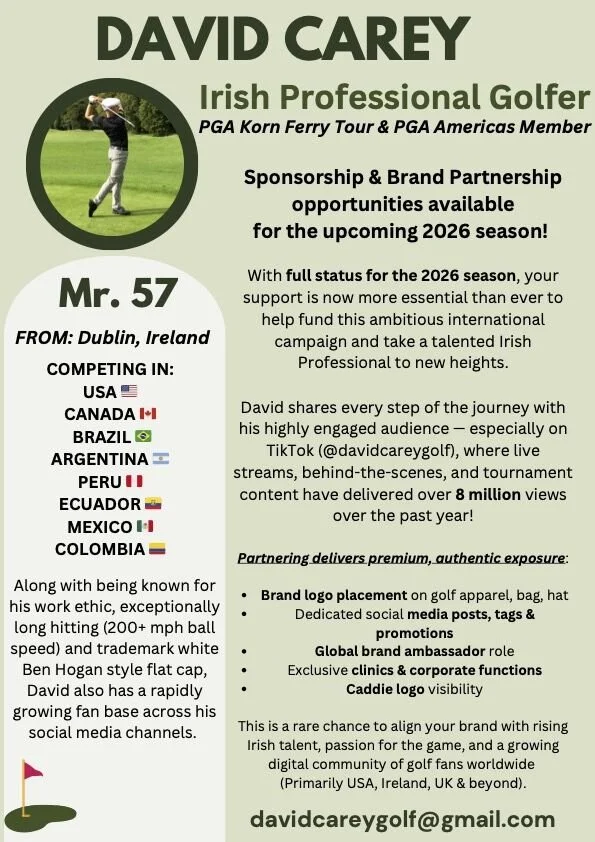
“It looks like to do the whole season is going to be in the ballpark of $100,000,” Carey admitted. “My savings are going to be raided to the last penny. A lot of it, I’m just going to have to go win, really.”
The brutal geography of the PGA Tour Americas schedule is to blame.
Starting in Brazil in mid-April, the tour crisscrosses six South American nations—including Argentina, Colombia, Peru, and Ecuador—before heading to the United States and then eight events in Canada.
If you were to travel from one event to the next without heading home, the total distance is 28,830 km —or just under three-quarters of the way around the planet.
"I can tell you one thing I've learned from what I've been looking at so far: the flights are going to be an awful lot longer than I expected," Carey said, admitting he underestimated the sheer scale of South America.
"If you're going back to the US in between a week, I think it's like 10 or 11 hours from Argentina. When you look at the world map, you don't really think it's further from Florida to Argentina than it would be from Dublin to Florida."
With rarely more than a week off between events, flying home to Ireland for a break is financially and physically impractical.
To keep costs down—and keep the show on the road—Carey will rely on his partner, Kaitlyn, who will double as his caddie for the majority of the season and carry a light bag "She drew the line there," Carey joked. "She said no tour bag!”
Carey is one of the most interesting of the Irish contingent currently battling to get off the lower-tier tours.
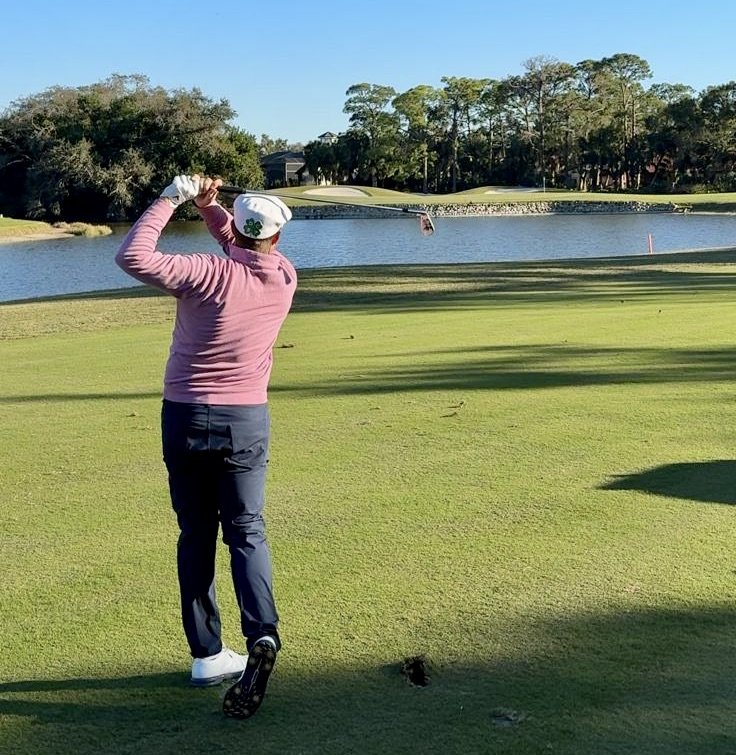
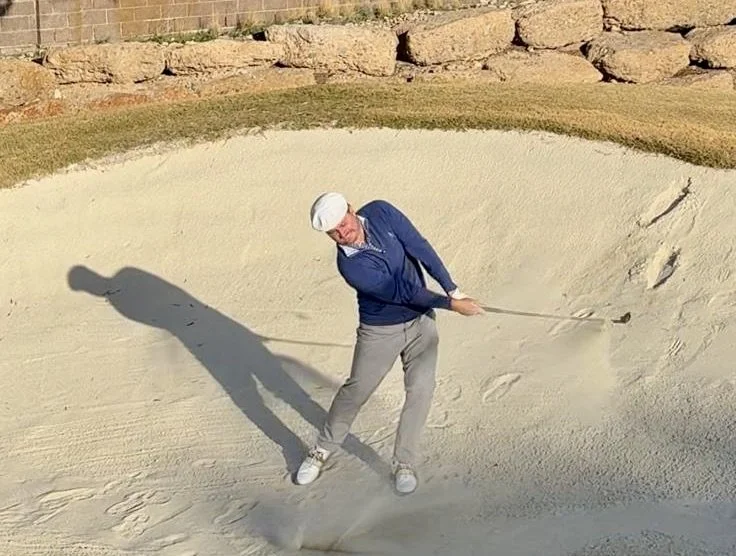
He qualified for the Final Stage of PGA TOUR Q-School last December and arrived TPC Sawgrass with dreams of earning one of five coveted PGA Tour cards.
It didn’t go to plan as he found the Bermuda grass greens more than a handful but he’sworking to solve that problem.
"The biggest thing was I just really struggled with the short game side of things that week," he reflected. "I've always had a bit of a love-hate relationship with Bermuda greens. Unfortunately, that was the hate week, not the love week."
He opened with a disappointing 77 with most of the damage caused by a quadruple-bogey eight on his 9th hole (the 18th at Dye’s Valley) effectively ending his hopes of a top-five finish before the weekend began.




"I just find with the grain, it can get into your head," he explained. "You start doubting your reads. It was just one of those weeks it happens."
In the aftermath, Carey went back to the data. Working with a Quintic system, he discovered his launch angle with the putter was too low, causing the ball to bounce off line on grainy surfaces. By adding a touch more loft, he hopes to have cured an ailment that has plagued him on American soil.
Despite his setbacks, Carey remains one of Ireland’s most explosive talents. Long before he was grinding on Monday qualifiers for PGA Tour events—successfully earning spots in the Valero Texas Open and RBC Canadian Open—he was making global headlines with that 57 in Italy .
In 2019, at the Cervino Open, Carey carded 11 birdies on a par-68 course nestled 2,000 metres up in the Italian Alps. His 57 remains the lowest recorded round in Alps Tour history
"I've had worse days," he famously joked at the time.
In 2022, he qualified for The 150th Open at St Andrews and made the cut.
As he looks towards the new season, Carey is refining a unique strategy. Known for his gargantuan power, he has learned that 198 mph ball speed isn't always an asset. To navigate tight fairways and avoid the "big numbers" that have bitten him in the past, he still uses a two-driver system.
“One is 8 degrees loft and 45 inches long and the other is 12 degrees and 43 inches,” he explained.
As for his speed work with the driver, he said: “I haven't really done a ton of work on the speed side in this last couple of months. I did one day in Vegas, and I think I topped 198 mph ball speed, so I still have it, if I need it.
But for the most part, I try to play in the high 180s to 190 range. That seems to be the most useful range, because otherwise it's getting a bit of dispersion.
“On a lot of the holes, just where the fairway tends to pinch in and where the bunkers tend to be placed, if you can pitch it 320 in the air, that generally gets by most of the bunkers. I think once you go beyond that, it doesn't make a huge amount of difference if you have 100 yards or 80 yards.”
With the season opener in Brazil looming in April, Carey is in the US to get ready and he plans to start by Monday Qualifying for the PGA TOUR’s Valspar Championship. His Koprn Ferry Tour status means that he no longer has to pre-qualify for the final qualifier.
The goal is simple: get off to a fast start, make some money, and alleviate the pressure of that $100,000 travel bill.
"It's going to be a lot of time away," said Carey, whose Korn Ferry Tour status also gives him access to the PGA TOUR’s TPC courses and a place to practice.
"But like everything, being a touring professional has its challenges. Overall, there's an awful lot worse things you could be doing than travelling the world playing golf."