'I had to go and pour Rosie a drink to calm her down' - Parents provide insight into McIlroy's Masters journey
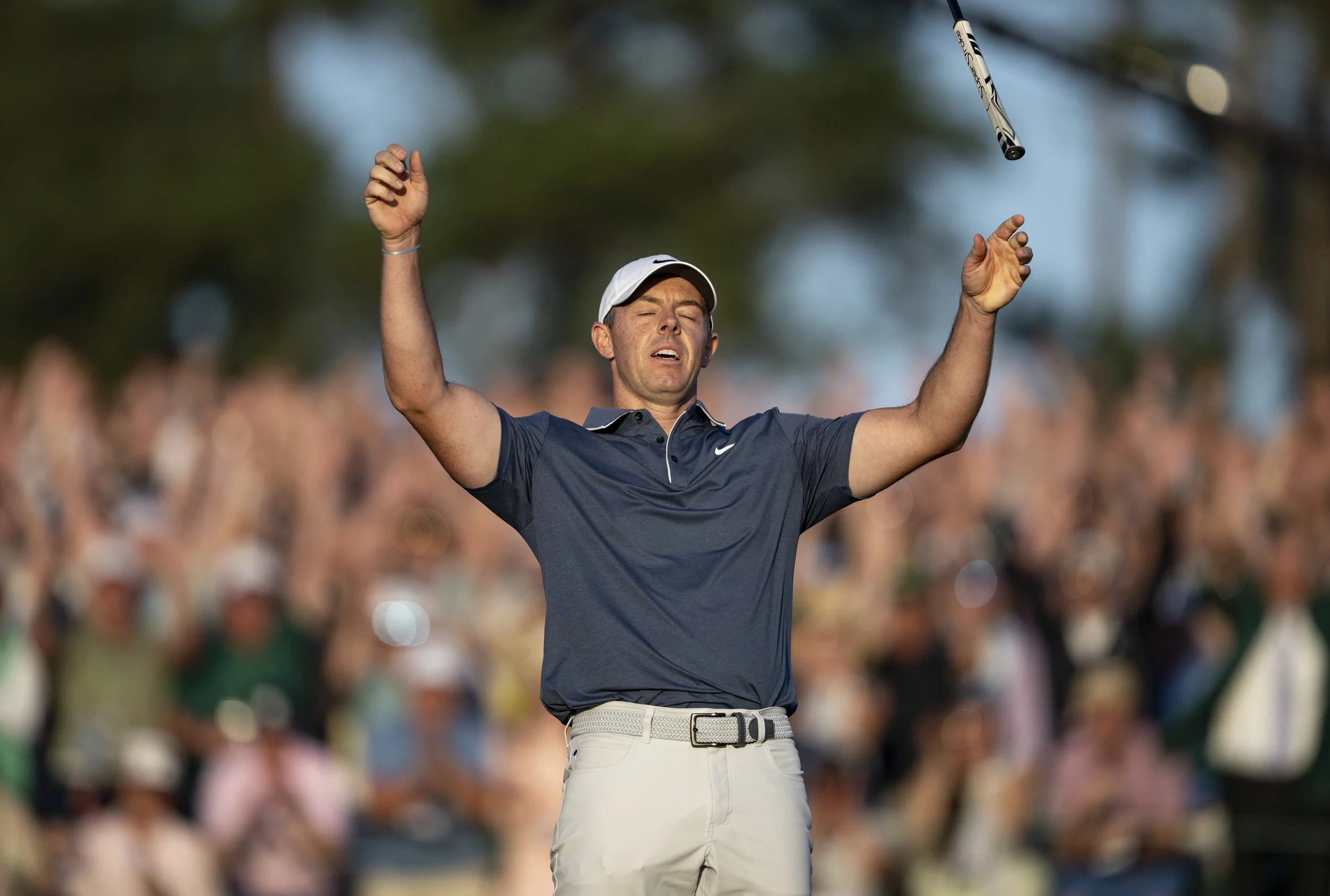
At last. Rory McIlroy in his moment of glory at Augusta National last year.
Never losing hope is the key message of “Rory McIlroy: The Masters Wait,” which will hit Amazon Prime screens here on Monday.
But it’s not just McIlroy’s agonising journey to Masters glory last year that makes this two-hour documentary a compelling watch, but the thoughts of his parents Rosie and Gerry.
They worked multiple jobs to give him a chance to chase his dreams and lived through all the disappointments, from the implosion of 2011 and the back-nine wobble last year to the moment of ecstasy when he finally caught what he describes as his “white whale” with that playoff win over Justin Rose.
Made in association with McIlroy’s production studio, Firethorn Productions, the win that saw McIlroy complete the Career Grand Slam at the 2025 Masters covers all the bases from his boyhood dream of winning all four majors to feeling imposter syndrome as the Masters proved elusive for 17 years.
Pieced together from archival footage, intimate interviews, and key moments from that historic final round, it’s everything you’d expect from a film about winning at Augusta.
The visuals are stunning, there’s drama galore and the inevitable schmaltzy shot at the end where McIlroy, clad in the green jacket, stands on the Giant’s Causeway in Co Antrim, staring out to sea.
It’s the kind of fairytale stuff we sign up for at the Masters every year but what makes it worth the watch is how it captures McIlroy’s inherent vulnerability, the baggage he took down Magnolia Lane every year and his battle to overcome the scar tissue of blowing a four-shot final round lead in 2011.
Viewers with children will wonder how they might have felt watching their own kids go through what McIlroy went through to make his dream come true.
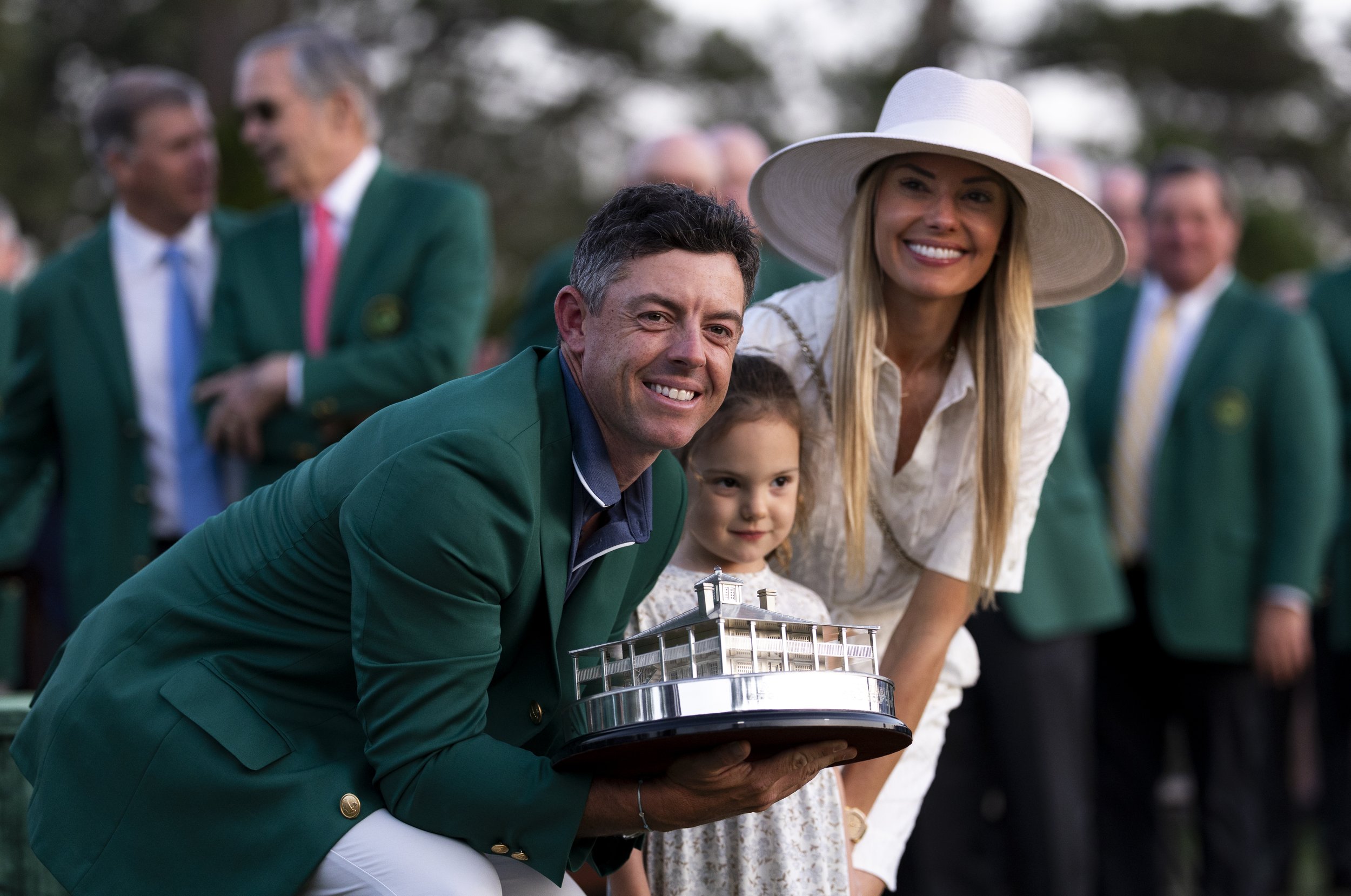
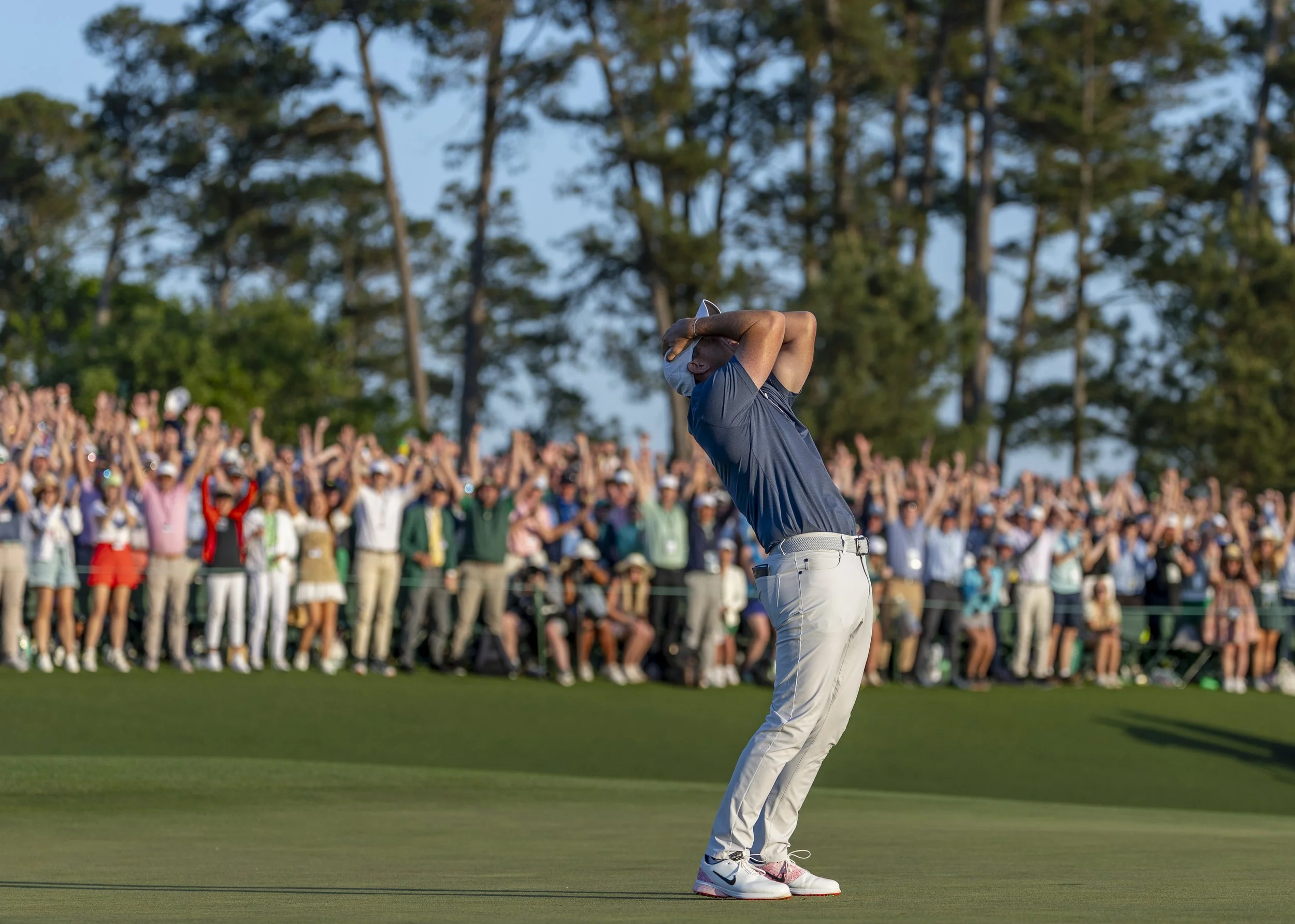
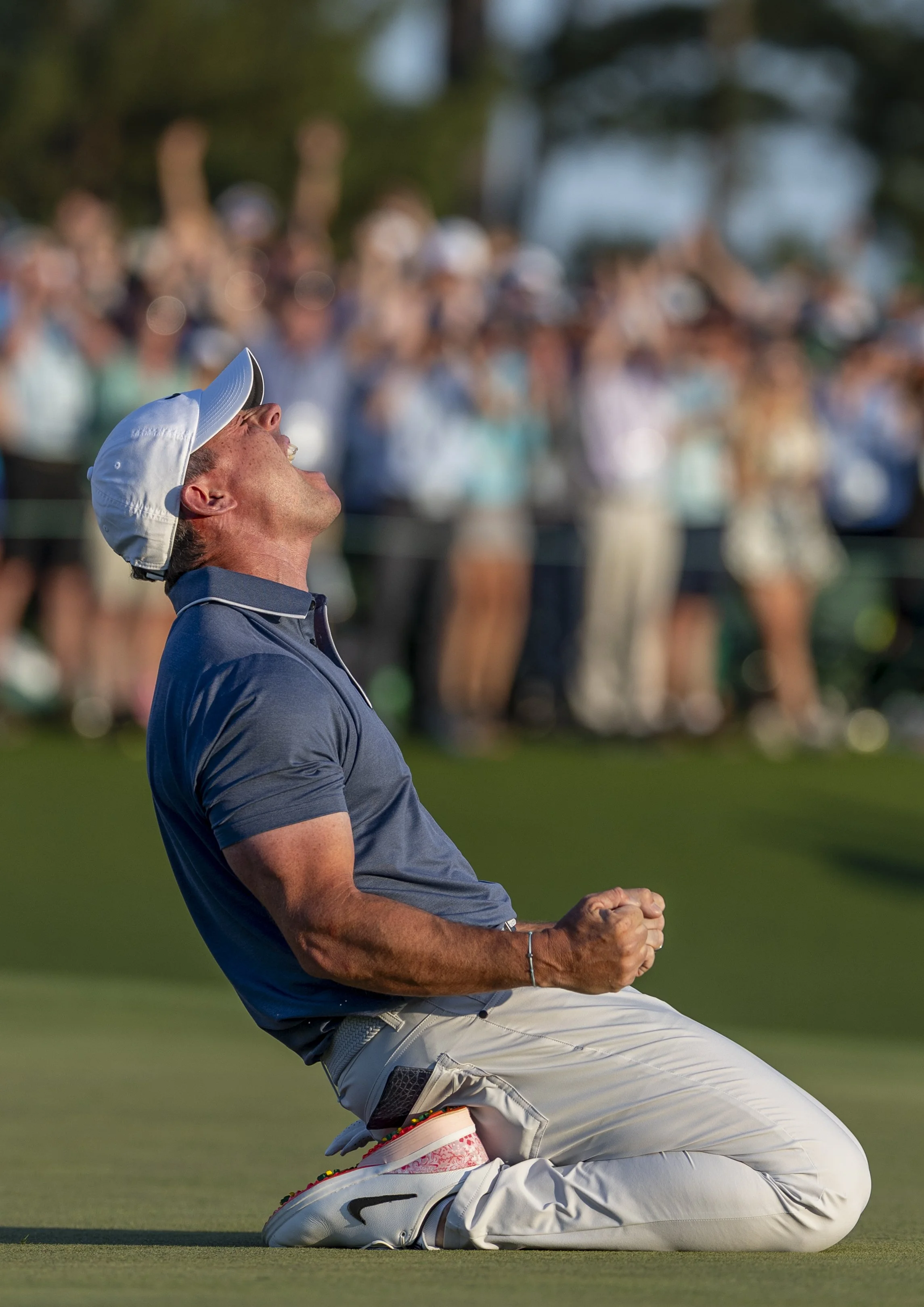
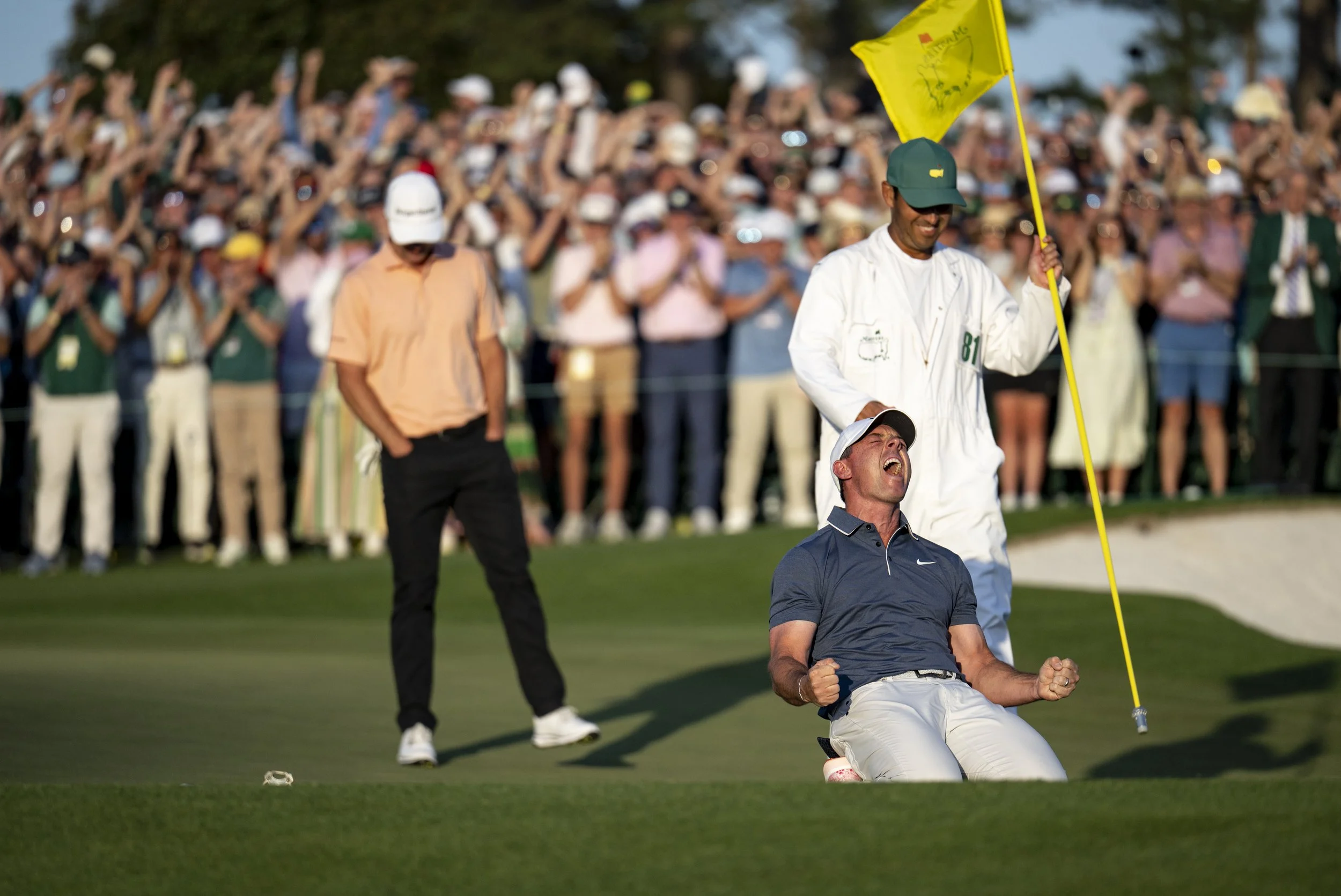
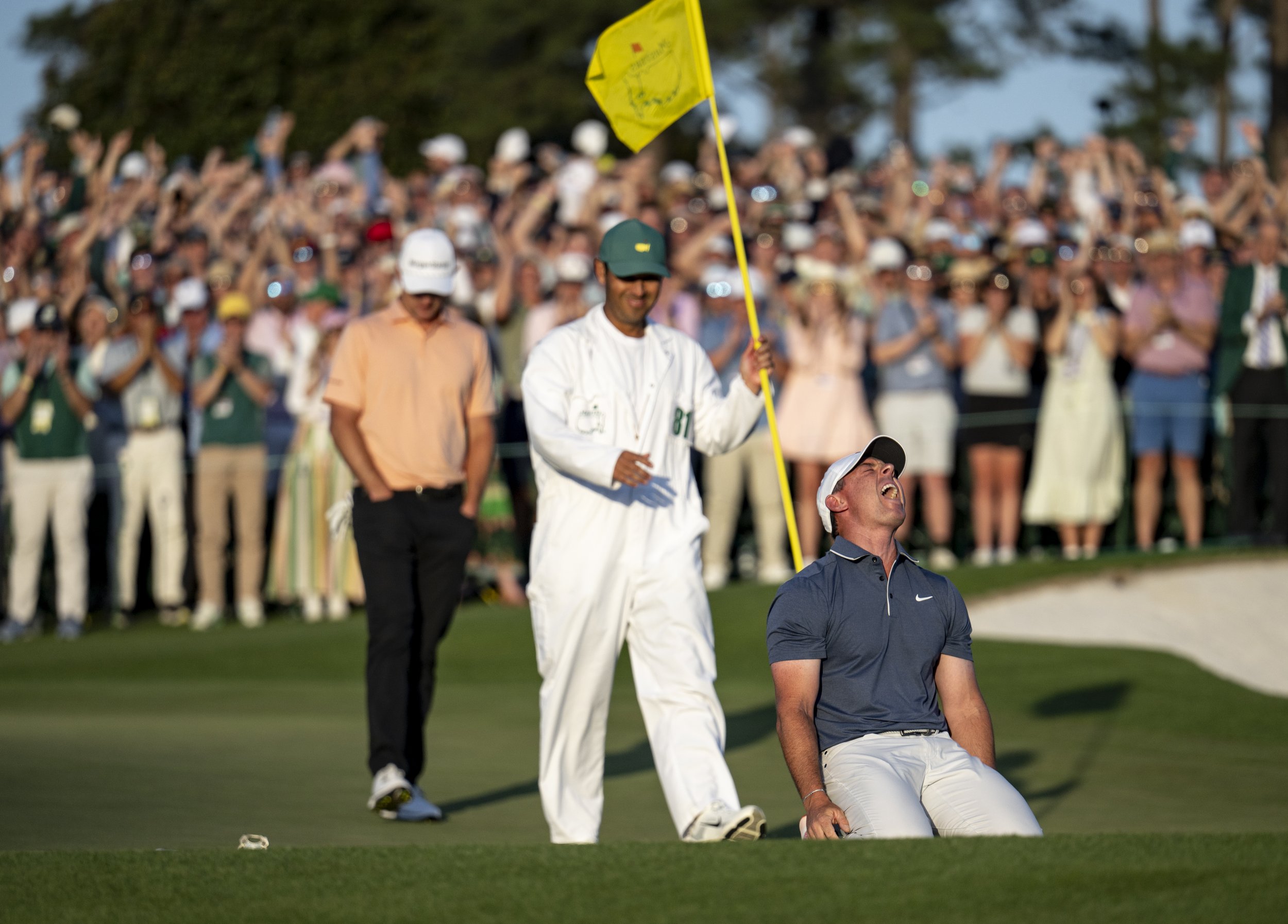
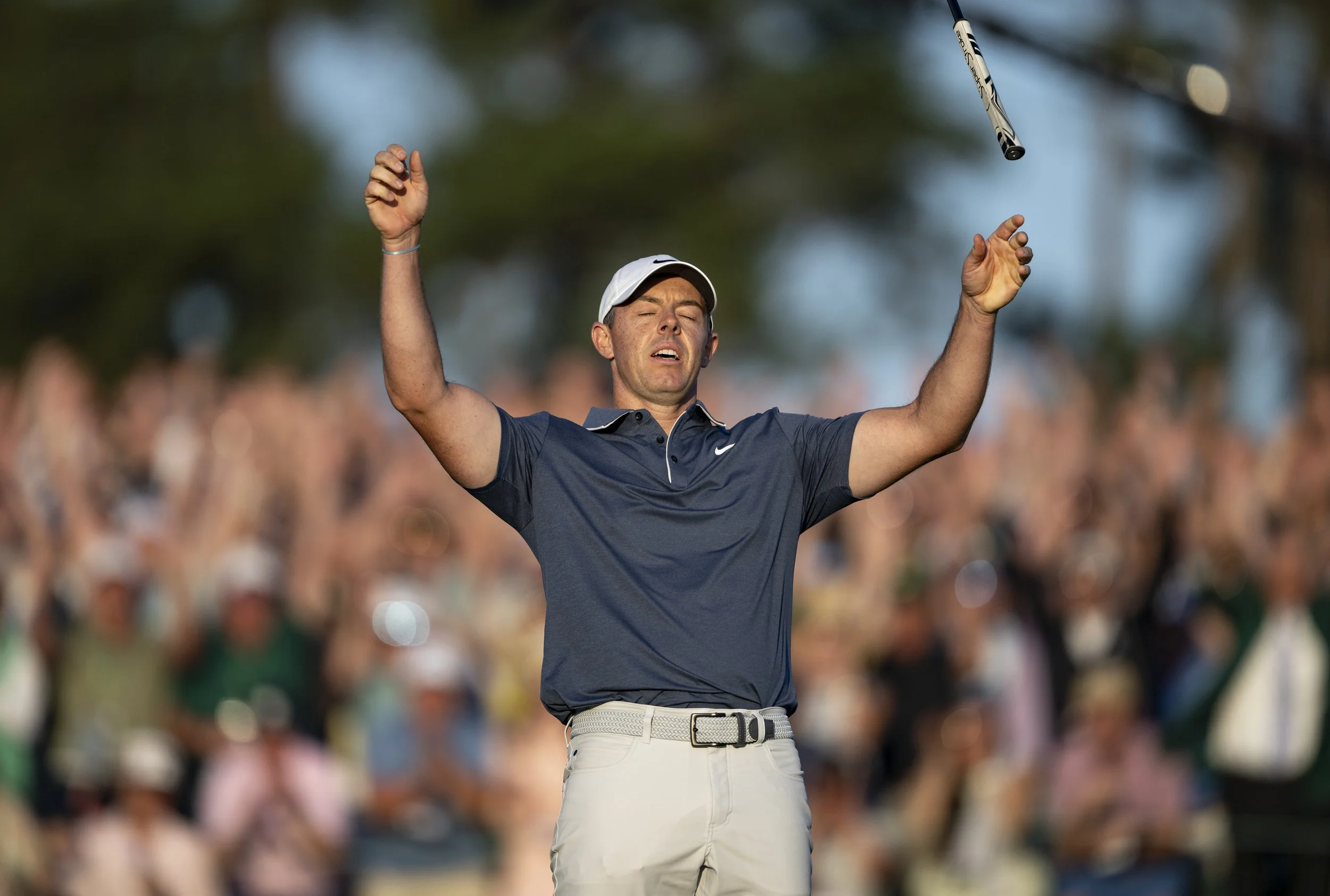
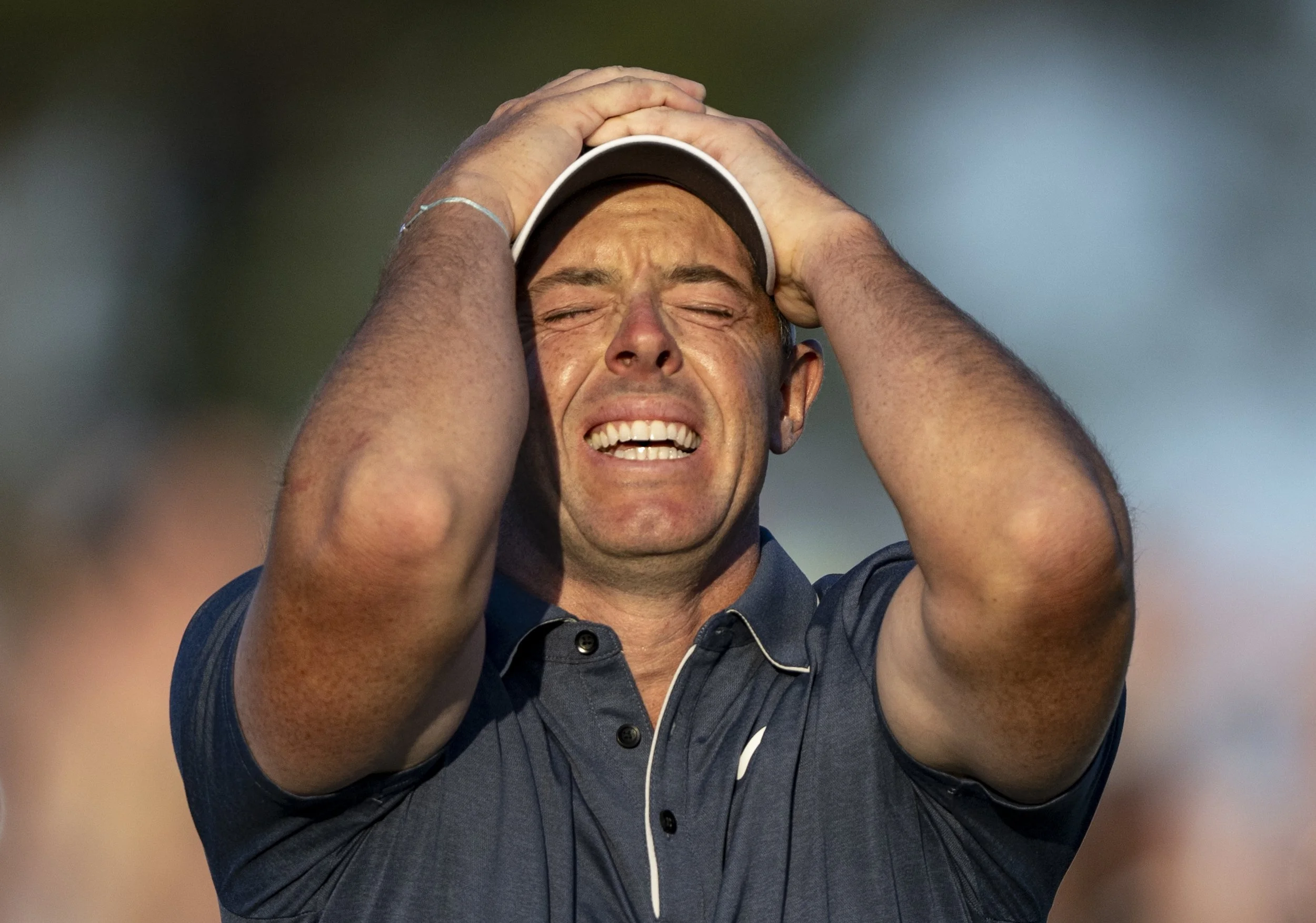
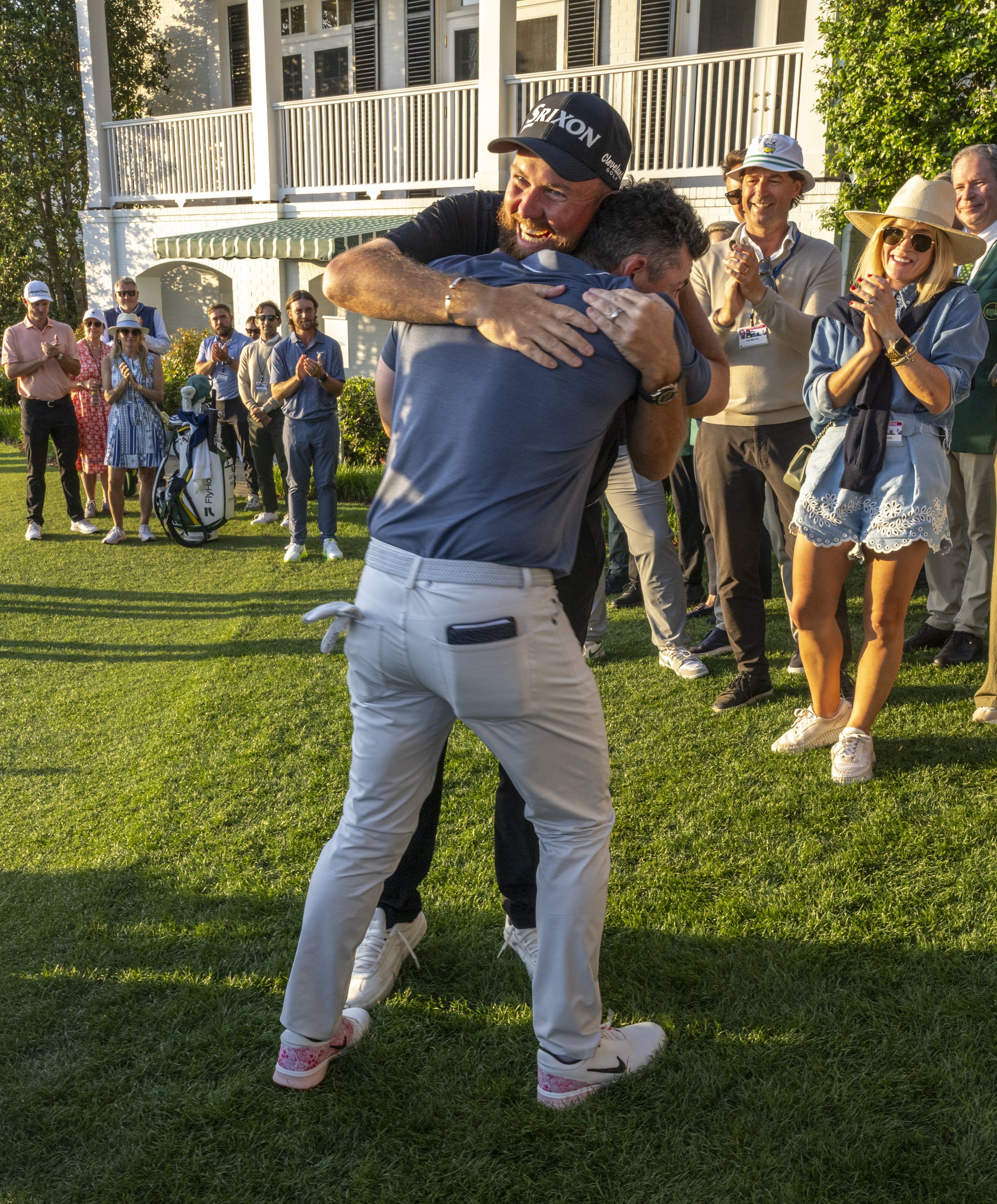
“Of course, I was crying,” his mother Rosie says of the Monday morning phone call home after the disappointment of 2011. “He was crying. The way he was carrying himself on the golf course just wasn't him at all.”
Dad Gerry admits that mere mention of the Masters put McIlroy on edge as the years went by and his major drought stretched to a decade.
When McIlroy blew his substantial back-nine lead last year and was caught by Justin Rose, his parents were watching the drama unfold on their TV screen at home and fearing the worst.
“I had to go and pour Rosie a drink to calm her down,” Gerry admits. “I actually had a drink myself. “I mean, I know Rory. You see, each year coming up to the Masters, Rory was always… he wasn't Rory. He was always very edgy. I
“If you talked about the Masters, he was a bit jumpy. You know? He was trying too hard.”
McIlroy admits his decision to consult psychologist Dr Bob Rotella was a huge part of his Grand Slam success.
“I've always been very comfortable on my own, and sometimes I'm stubborn, and sometimes I'm reluctant to reach out for help, and I feel like I can figure it out my own, but I needed to get over that,” McIlroy admits.
“I remember I was really struggling, and I drove from the Scottish Open to the Open Championship at Royal Birkdale (in 2017), and I listened to the audiobook, Golf is not a Game of Perfect by Bob Rotella.”
When McIlroy goes on to win, it’s his mother who best sums it all up.
“When that last putt went in, you couldn't have stopped me crying for love nor money,” she says in her Lurgan burr. “Two and a half hours I cried for.”
She never doubted him.
”Why is there only six people has ever done it?” she says of the career Grand Slam. “It must be very special, and I always knew my son was very, very special."
McIlroy recently shot extra footage at Augusta for the movie —including close-ups of him re-gripping the club and taking a final look at the target as he prepares to hit that iconic 20-yard hook with a seven-iron from behind trees at the par-five 15th.
“I stood up, and I made the most trusting, committed swing,” he says.”I knew it as soon as I hit it, and that's when I started to walk after it.”
Jack Nicklaus, who had counselled patience over lunch years earlier, calls the shot "one of the most fantastic shots I've ever seen." “First of all, I don't think many people would have tried it,” the Bear says. “But I think he felt like he needed to at the time. Sometimes you feel like you need to make a shot. You do it.”
Social media has already latched on to McIlroy’s thoughts on his standoff on the ninth green with Bryson DeChambeau over who was to putt for birdie first.
“It's a very gamesmanshipy matchplay thing,” McIlroy says. “He goes, 'Well, why don't we just throw a tee up for it to see who goes first?' “And I'm like, 'No, this is the final round of the Masters. This isn't some like game on a Tuesday afternoon somewhere. I'm like, No, I wasn't going to wilt in that situation, I was just going to stand firm. “So I said, there's a ref, why don't we get him up to come and measure? And he said, No, no, it's fine, you can go anyway. I don't care. And I just felt like that was a really big moment.”
As for winning, he admits it doesn’t mean he’ll never blow a tournament again or even struggle at the Masters.
“That was the white whale of my career, and I'm glad that I caught it,” he says. “I wouldn't say I'll ever tame it or I'll ever have it fully under control, but I think to find that persistence and to find whatever it is I needed to find within myself to keep coming back and to keep trying, that's the thing I'm proudest of.
“I'm proudest of not losing hope.”